



Cycle of Neglect: What Nigerian Workplaces Are Getting Wrong About Menstrual Health
Every month, millions of Nigerian women go to work in pain. They sit through meetings, hit deadlines, manage teams, and show up all while navigating cramps, fatigue, heavy flow, and the quiet anxiety of hoping nobody notices.
And most of their employers have no idea.
We decided to find out exactly how bad the gap is. We surveyed 154 working women across Nigeria’s major sectors; healthcare, tech, finance, law, government, and more and what we found was hard to ignore.
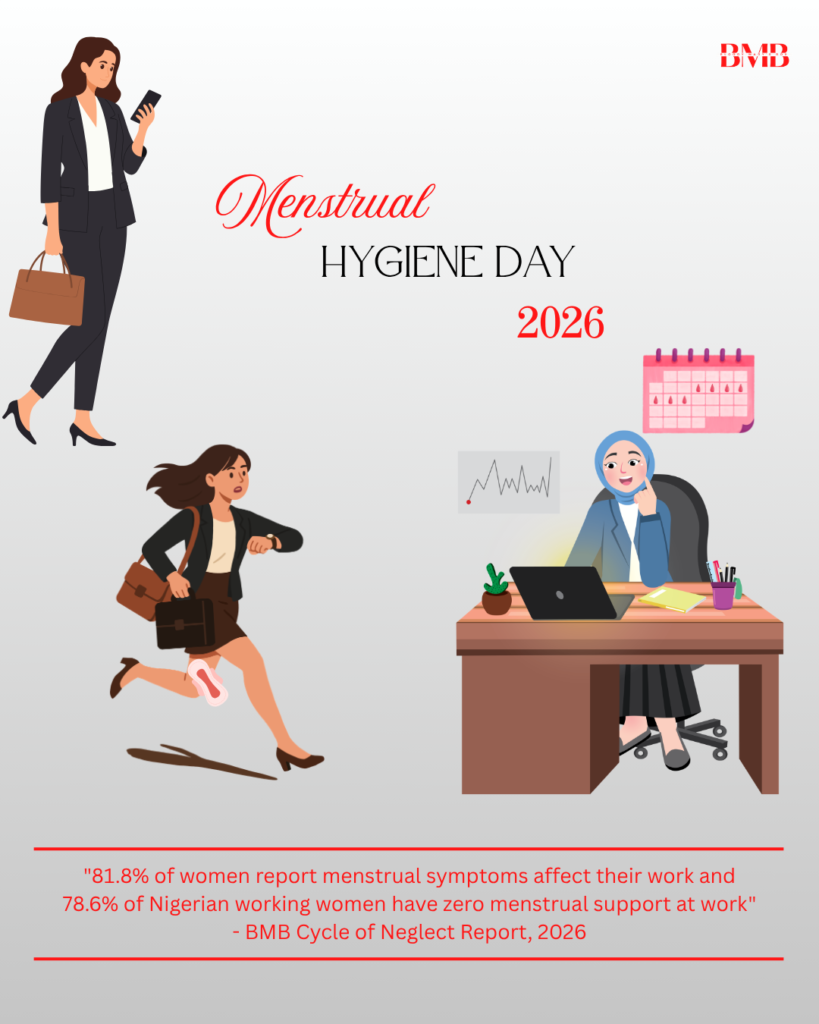
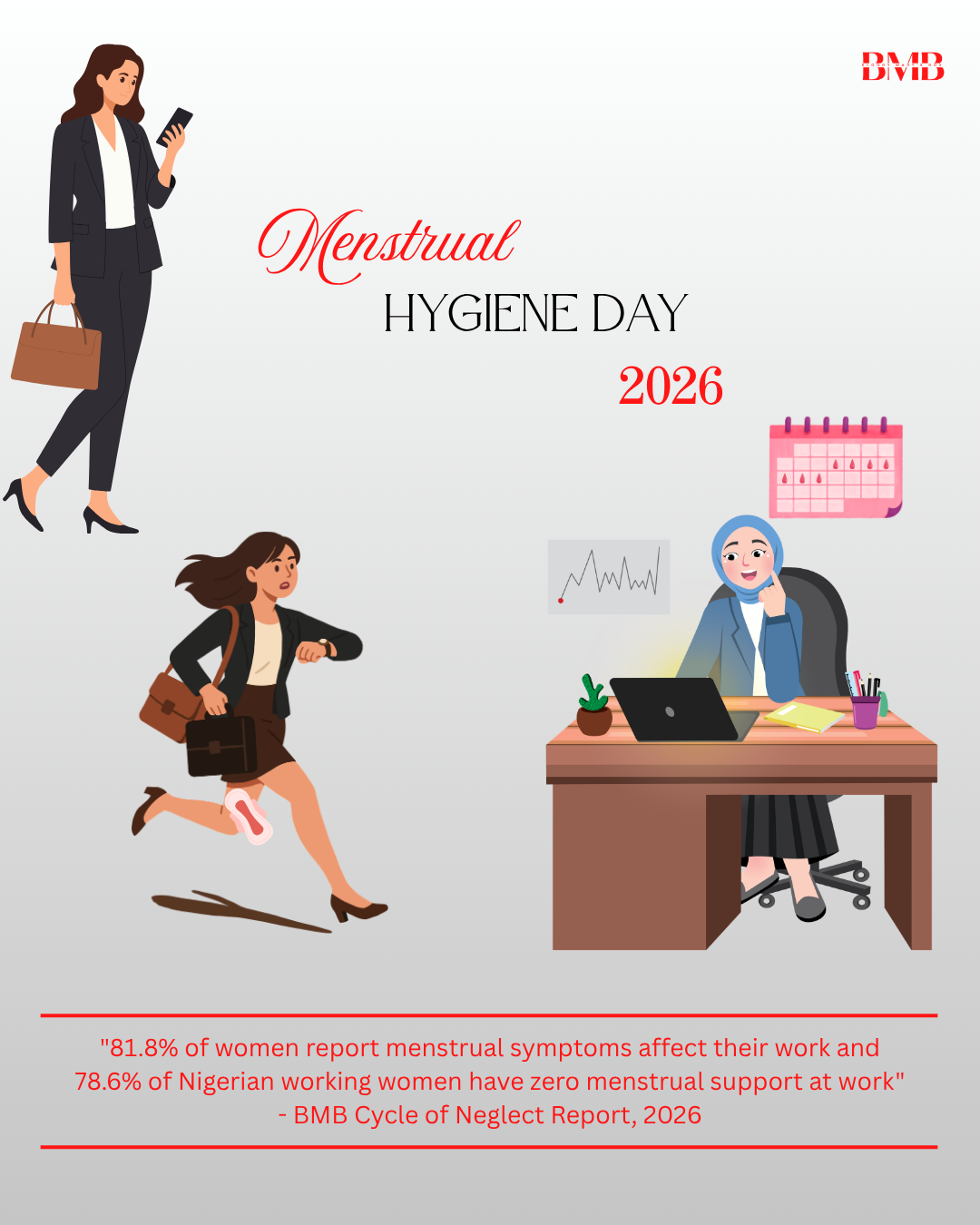
81.8% say their period affects their work. Not occasionally, not rarely, regularly. Over a third of respondents said it happens frequently. Nearly 80% lose two or more productive workdays every single month because of their cycle. That’s over 24 days a year, per employee, of compromised performance quietly absorbed by the women themselves.
And what are their employers doing about it?
Almost nothing.
78.6% of respondents have zero menstrual support in their workplace. No products in the restroom. No flexible leave. No wellness provision of any kind. The average workplace support score, rated by the employees themselves, sits at 3.6 out of 10. Nearly one in three women gave their employer the lowest possible score – a 1 out of 10.
This is not a minor gap. It is a systemic failure hiding in plain sight.
What makes this even more striking is how simple the solution is. We asked respondents how they would feel if their employer provided a monthly menstrual wellness package; sanitary products, pain relief support, herbal tea, tracking tools. 79.9% said they would feel more valued. 86.4% said it would increase their loyalty to their organisation. 63.6% said it would influence their choice between two otherwise equal employers.
The business case writes itself.
We compiled everything; the data, the patterns, the employee sentiment, and the full recommendations for employers into a report. It is called Cycle of Neglect, and it is our contribution to the conversation this Menstrual Hygiene Day.
Because awareness posts are not enough anymore. The numbers exist. The solutions exist. What we need now is for the people making workplace decisions to pay attention.
Read the full report here → [Cycle of Neglect]