


Period poverty is often discussed in statistics, policy papers, and awareness campaigns. It is described as “lack of access to menstrual products, sanitation, and education.” That definition is correct but I think it is also incomplete. Why? Because on the ground, period poverty is not a definition. It is a feeling. It is a reality. It is a quiet kind of stress that shows up every month and rearranges a person’s dignity, routine, and sometimes even their future. When period poverty is real, pads are rationed like scarce resources. You see people:
- Using one pad for far longer than is safe
- Folding tissue, toilet paper, or cloth inside underwear as backup
- Wearing the same pad all day at school or work
- Avoiding changing frequently because “what if it finishes?”
Hygiene becomes secondary to survival. Not because they don’t know better—but because they are trying to stretch something that was never enough in the first place.
Period poverty starts before the blood even comes
For many menstruating people, the anxiety starts days before their period and it’s not because of cramps. Period Poverty Is Bigger Than Money
We talk about period poverty like it’s a price problem. Like if we just made pads cheaper, or gave them away for free, we’d solve it. And yes, cost matters but that framing leaves out so much of what’s actually happening to girls and women every single month.
Period poverty is about money, yes. But it’s also about knowledge. It’s about shame. It’s about a school system that would rather stay silent than say the word “menstruation” and speak on all it entails because they feel it’s “too much.” It’s about a market woman who’s been bleeding through her wrapper since 6am and has six more hours to go.
Let’s talk about all of it.
- The Product Problem Nobody’s Talking About
Most conversations about period products start and end at disposable pads. But the world of menstrual care is wider than that; menstrual cups, period underwear, reusable cloth pads/Pants/Briefs, discs, tampons. Products that are often more affordable long-term, more comfortable, and better for the environment.
The problem? Most women and girls have never heard of half of them. And the ones who have heard of them don’t know how to use them, don’t trust them, or have been told they’re “for wild girls or oyibo people.”
So they keep buying single-use pads every month or they don’t buy anything at all and improvise with tissue, old fabric, or nothing. Not because better options don’t exist, but because no one ever showed them.
Lack of access to product knowledge is its own form of poverty. When your only frame of reference is one product, you’re trapped in a cycle that’s both expensive and limiting. Period care should include options, real ones, with real education behind them.
- What School Never Taught Anyone
Think back to your own experience. What did school actually teach you about your period?
For a lot of Nigerian girls, the answer is: almost nothing. It was a biology diagram of a uterus and a mortifying class where the boys were sent outside but still taunted us after. Shout out to the pad brands who sensitized us and left us with pads for our next cycle.
The stigma around menstrual education in schools isn’t just uncomfortable, it’s harmful. When girls don’t understand what’s happening to their bodies, they can’t manage it. They miss school. They sit in confusion and pain, ashamed to ask for help. They grow into women who pass the same silence down to their daughters.
And the boys? They grow up thinking periods are either a joke or a secret. Which is exactly how we end up with grown men making policies about menstrual health who’ve never had a single honest conversation about it.
Schools have the power to change this and most of them are choosing not to upgrade their curriculum to better reflect menstruation and all its nuances. That’s not neutral. That’s a decision with consequences.
- The Market Woman
She’s up before sunrise. She sets up her stall, arranges her goods, greets her first customers, manages her money, feeds her family. She doesn’t have a bathroom nearby. There’s no break room and she doesn’t have sick days. When her period comes, she manages it in the margins by changing when she can, improvising when she has to, pushing through the cramps because the alternative is losing a day’s income she can’t afford to lose.
Nobody’s writing think-pieces about her. Nobody’s running workplace wellness programmes for her. She exists outside the conversations about menstrual equity, even though her reality is one of the harshest examples of it.
Period poverty for the market woman isn’t just about the cost of products. It’s about the complete absence of infrastructure. No private changing space, no WASH facilities, no waste disposal, no flexibility, terrible surrounding hygiene and no one who even thinks to ask if she’s okay.
- The School Girl
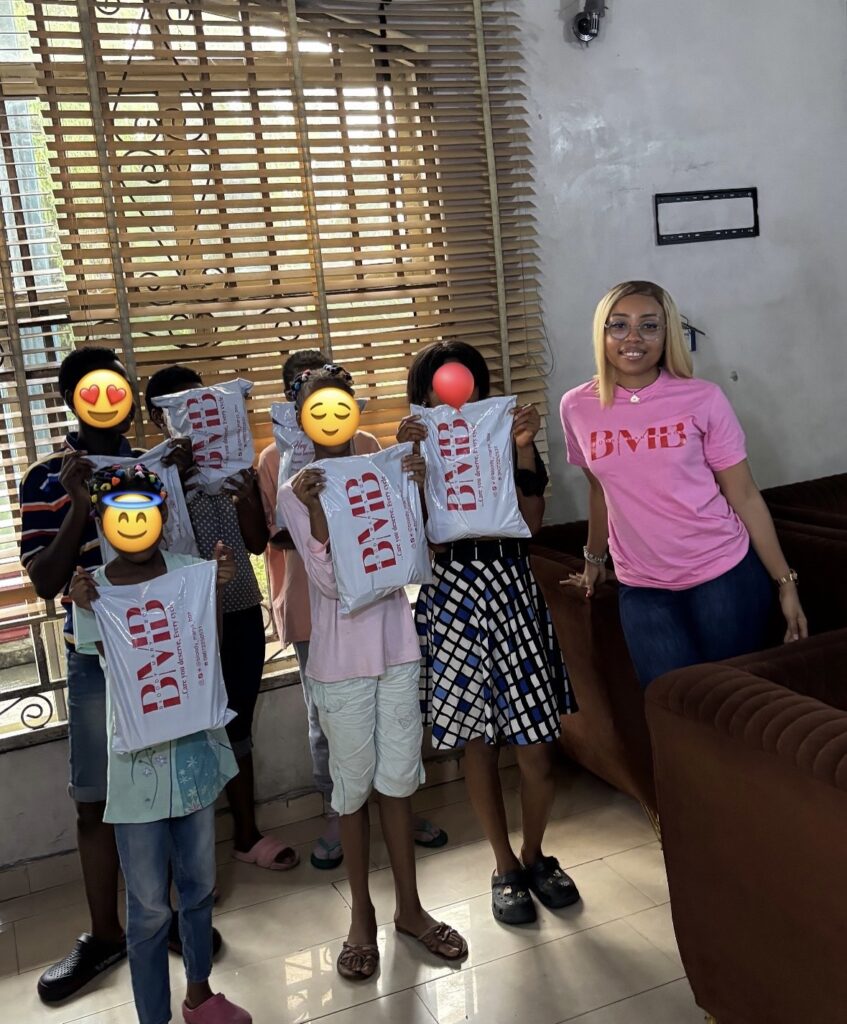
She’s twelve, maybe thirteen. Her period started three months ago and she still doesn’t fully understand it. She doesn’t have products at home. Or she has some, but she ran out and her mother won’t have money until the end of the week so she stays home. Or she comes to school and spends the whole day terrified of leaking, distracted by the discomfort, unable to focus on anything being taught.
Imagine being 13, bleeding unexpectedly, and realizing you have nothing on you. No pad. No spare underwear. No access to a private toilet with water and adequate disposal facilites.
So now she has to stay seated, avoid standing and if she does, ask someone to “check if she’s stained”. She may skip classes entirely. Sometimes she goes home early and tells no one why. Over time, this becomes absenteeism. Then it becomes falling behind. Then it becomes disengagement. Not because she cannot learn but because her body is doing something natural in an environment that is not prepared for it.
Studies will tell you girls miss several school days a year due to menstruation. What studies can’t capture is what it does to a girl’s confidence when she spends years associating her period with fear, embarrassment, and falling behind. That damage is quiet and cumulative and it shapes the kind of woman she becomes.
- The Working Woman
She has a job. A desk, maybe. A uniform. A boss. Performance reviews. Targets.
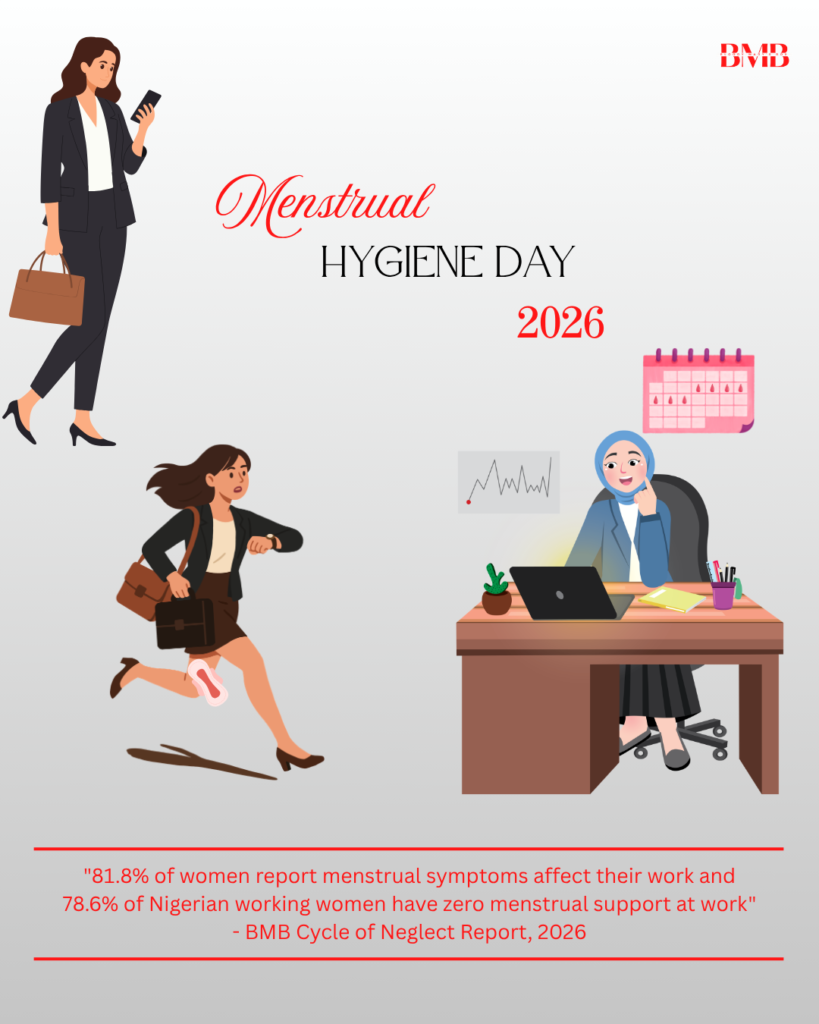
And every month, she manages her period in addition to all of it; in secret, in pain, and mostly without any accommodation from her workplace. She books her important meetings around her cycle when she can and learns to read a room before deciding whether it’s safe to say she has cramps.
Menstrual leave is not a thing in most Nigerian workplaces. Menstrual health is not a line item in most HR budgets. The expectation is that she shows up, performs, and keeps the biology to herself. Due to this, some leave work early because they cannot change pads comfortably. Some avoid certain tasks that require long hours of standing. Working women are grossly underpaid so they may have to skip meals just to afford a pack of unplanned pads from a nearby kiosk because there are no provisions for pad in the restroom.
In some cases, a single cycle can shift someone’s financial balance—especially when income is daily or inconsistent. .
The working woman isn’t the most visible face of period poverty. But the silence she’s required to maintain, the performance of being fine, is its own kind of cost.
So What Does Period Poverty Actually Mean?
It means a girl missing school because she doesn’t have a pad and doesn’t know there are other options.
It means a woman sitting in pain at a market stall with nowhere to go and no one to ask.
It means a professional managing her health around a workplace that doesn’t acknowledge it exists.
It means a whole generation of women who never got real education about their bodies, so they’re navigating adulthood with incomplete maps.
Period poverty is financial. But it’s also informational. It’s structural. It’s cultural. It’s the sum of every time someone chose silence over education, convenience over access, discomfort over conversation.
Solving it means more than cheaper pads. It means better education, wider product awareness, workplace policies that actually account for bodies, and infrastructure that says: yes, this is normal, and you deserve to manage it with dignity.